Helping a Sarasota senior who refuses to move, even when home isn't safe
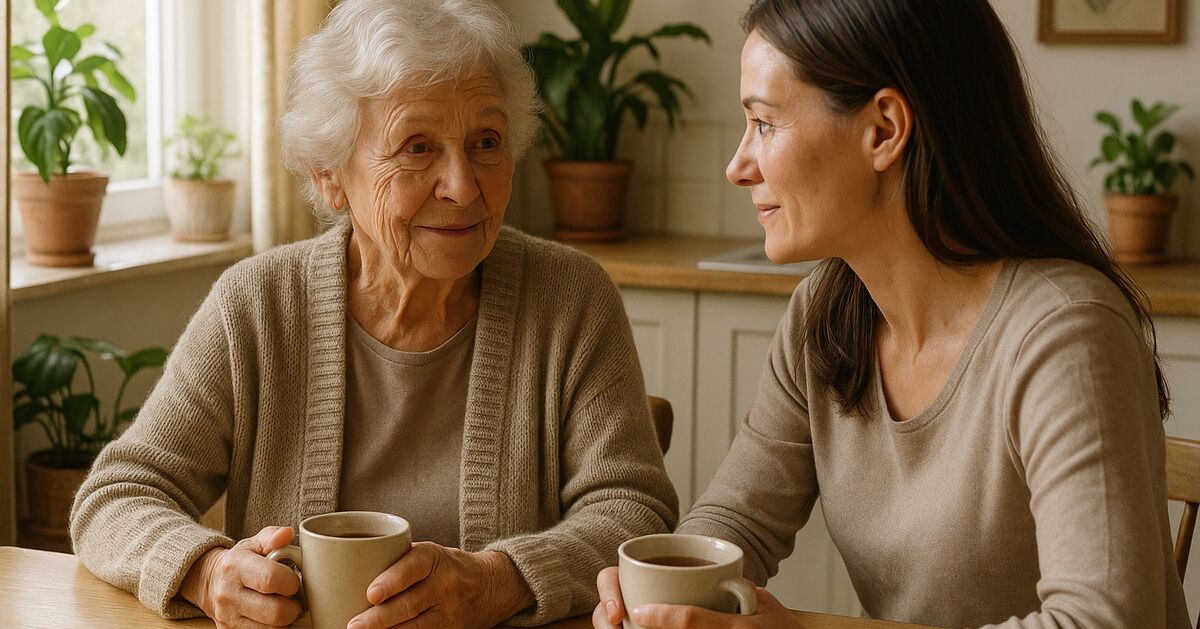
Telling someone they can no longer safely live in the home they've kept for thirty years is one of the hardest conversations a family will ever have - and hearing "no" in response is far more common than most people expect.
If your parent or spouse is digging in, refusing to even tour a new place, or shutting down every conversation about moving, you are not alone. This situation plays out every week across Sarasota County, from quiet streets in Bee Ridge to waterfront cottages on Casey Key. And it almost never resolves itself through logic, lists, or pressure.
This post is about what actually helps.
Why seniors refuse to move - and why the reasons matter
Before you can respond to resistance, you have to understand what's underneath it. "I'm fine" rarely means your loved one thinks everything is truly fine. It usually means one or more of these things:
- Fear of losing identity. For many older adults, their home is not just a building. It holds their history - the kitchen where they raised children, the garden they tended for decades, the neighborhood they know by heart. Moving can feel like erasing who they are.
- Fear of losing independence. A move to an assisted living community or a smaller apartment can feel like a giant step toward dependency, even if it would actually give them more freedom day-to-day.
- Fear of the unknown. Senior living has changed dramatically in the last twenty years, but many older adults still picture institutional settings from a different era. They may not know what modern communities in Lakewood Ranch or Gulf Gate actually look like or feel like.
- Grief. Sometimes refusal is grief wearing a different mask. The person is mourning the life they built, and agreeing to move means admitting that life is over.
- Cognitive changes. When memory or judgment is affected, a person may genuinely not perceive the risks that are obvious to everyone around them. This is a different situation that calls for different strategies and often professional guidance. (Our post on downsizing a senior with dementia covers that specific path in detail.)
None of these fears are irrational. They deserve to be taken seriously, not argued away.
The first mistake families make: presenting the decision as already made
Adult children often come to this conversation having already researched communities, maybe even toured a few, with a mental shortlist ready. That is understandable - you've been watching the situation deteriorate and you feel urgency. But walking in with a plan you've developed without your loved one feels like a takeover, not a conversation.
Even if the move does need to happen, and soon, the person who is moving needs to feel like a participant, not a passenger. Loss of control is already at the center of their fear. Removing them from the decision-making process makes resistance worse, not better.
Start earlier in the process than you think you need to. Introduce the idea of "what would we do if things changed" long before the situation becomes a crisis. These early conversations, low-stakes and open-ended, plant seeds that make later discussions less alarming.
Listen more than you talk
In the first few conversations, your job is not to persuade. Your job is to understand.
Ask questions and actually sit with the answers:
- What would you miss most about this house?
- What worries you most about moving?
- What would a good living situation look like to you?
- Is there anything that would make you feel more open to looking at options?
You may hear things that surprise you. Some seniors have very specific fears that can be addressed practically. One person may be terrified of giving up their cat. Another may be worried about affording it. A third may have had a bad experience visiting a friend in a poorly run facility years ago and is carrying that image as their reference point.
When you know what's actually driving the resistance, you can respond to the real concern rather than the surface-level "no."
Bring in a neutral voice
Sometimes the biggest barrier is simply that the message is coming from you. Spouses and adult children are emotionally entangled in this situation, even when they're trying hard to be calm and reasonable. Your loved one may hear judgment, impatience, or agenda in your voice even when none is intended.
A trusted third party - a doctor, a social worker, a close friend, a pastor, or a senior move manager - can sometimes say the exact same thing you've been saying and have it land completely differently.
If your loved one has a physician they trust, consider asking the doctor to weigh in directly. A medical professional naming specific safety risks carries weight that a family member's worry sometimes doesn't.
Senior move managers are often brought in at this exact stage, not to pack boxes, but to be a calm, experienced presence who has navigated this particular kind of stuckness many times before. Understanding what a senior move manager actually does can help you decide whether that kind of support makes sense for your family.
Reframe what moving means
The word "moving" carries a lot of weight. So does "assisted living," "memory care," or "facility." Before those conversations go anywhere useful, it sometimes helps to change the language entirely.
Instead of "moving to assisted living," try "finding a place where you'd have more help on the hard days."
Instead of "you can't live alone anymore," try "we want to make sure you're somewhere that feels safe when we can't be there."
Instead of "you have to downsize," try "let's think about what would make your daily life easier."
This isn't about manipulation. It's about accuracy. The goal really is to find a situation where your loved one has more support, more safety, and ideally more social connection than they currently have. Framing it that way is truthful and more likely to open a door.
Let them lead wherever you can
Within whatever real constraints exist, give your loved one as much genuine choice as possible.
- Which communities do you want to visit first?
- Do you want to bring a friend along when we tour?
- Which pieces of furniture matter most to you?
- Do you want to keep the same doctor, and can we find a place close enough to do that?
Every real choice you return to them reduces the feeling of powerlessness that makes resistance worse. If they help choose the community, they are more likely to feel some ownership over the decision. If they decide which five paintings go on the walls of the new apartment, the new apartment starts to feel like theirs.
For families in Lakewood Ranch, Englewood, or North Port, the good news is that Sarasota County has a wide range of senior living options at different price points, sizes, and care levels. There is almost always a place that fits better than families initially assume. Our post on how to choose the right senior living community in Sarasota County walks through how to evaluate options in a way you can do together with your loved one.
Address the practical fears head-on
If your loved one is worried about money, get real numbers in front of them rather than letting the fear stay vague.
If they're worried about what happens to everything they own, address that directly. Many families are surprised to learn how much can transfer to a new home, and how thoughtfully the rest can be handled. Our post on what happens to belongings a senior can't take covers exactly this.
If they're worried about being lonely or bored, ask about visiting a community for lunch or attending an event before committing to anything. Most communities in the Sarasota area welcome drop-in visits or short trial stays. Seeing an active, warm environment in person dissolves a lot of outdated assumptions.
Know when to get professional help
There is a point in some situations where a family has done everything right and the resistance still hasn't moved. The safety risk is real and escalating - falls, missed medications, a kitchen left on, a door left unlocked overnight - and the person will not engage.
At that point, it is worth speaking with a geriatric care manager or elder law attorney about what options exist, including whether medical evaluation or legal guidance is appropriate. These are hard conversations that call for professional support, not just family determination.
A senior move manager is not a substitute for that kind of professional intervention when genuine capacity questions are involved. But they can be an important part of the team once the decision is moving forward, helping the transition feel as gentle and organized as possible for everyone.
What the move itself can look like
When the decision does happen, the logistics do not have to be chaotic or cold. A thoughtful move can feel like something done for your loved one rather than to them.
That means setting up the new space so it feels like home from the first night - familiar furniture arranged in familiar ways, photos on the walls, the right lamp in the right corner. It means not rushing the goodbye to the old house, and letting your loved one take a last walk through at their own pace.
Senior move managers who serve the Sarasota area, from Fruitville to Lido Key, specialize in making this transition feel human. They handle the physical details so that you and your loved one can focus on the emotional ones. You can learn more about how the process works on our frequently asked questions page, or get in touch to talk through your specific situation.
One last thing: take care of yourself too
Watching a parent or partner resist help they genuinely need is exhausting and heartbreaking. You are carrying worry for their safety, grief about the changes you're witnessing, and often guilt about decisions that feel forced no matter what you choose.
Give yourself some grace. You did not create this situation, and your desire to make sure your loved one is safe is an act of love, even when it doesn't feel that way in the middle of a hard conversation.
Finding the right support - whether that's a counselor, a senior move specialist, or just another family member to share the weight - makes this more manageable for everyone involved. You don't have to figure this out alone, and neither does your loved one.