Downsizing a senior with dementia: a compassionate guide for Sarasota families
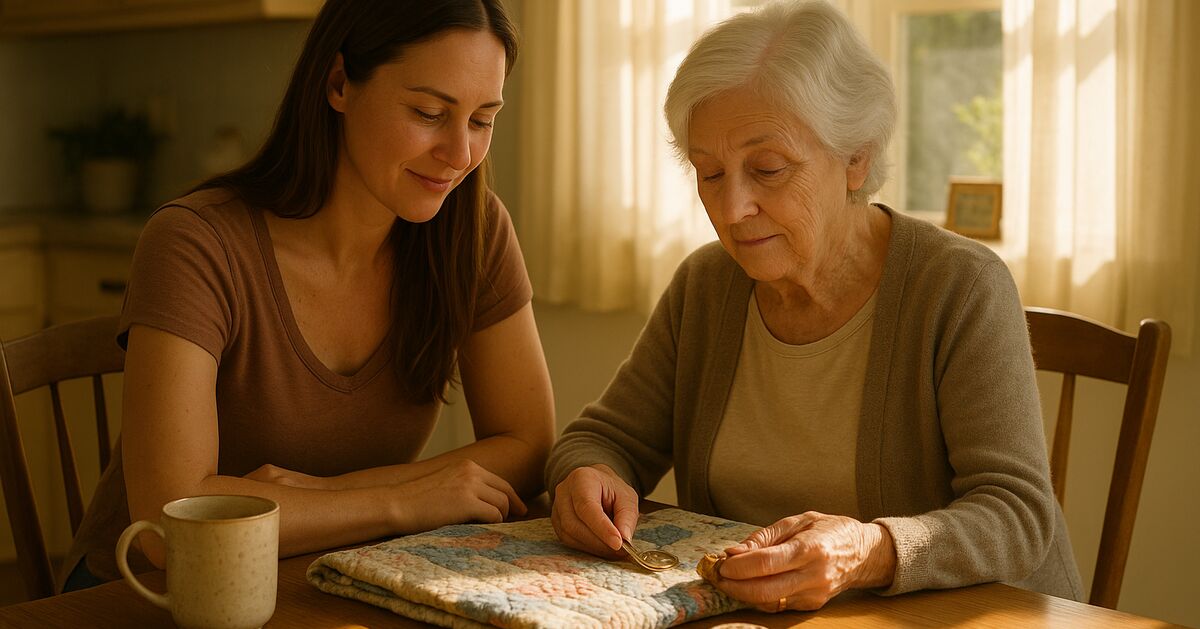
Every object in a home tells a story, and for a senior living with dementia, those stories are often the last threads connecting them to who they were. That is what makes downsizing so hard when memory loss is involved, and why the usual advice about "just sort things into keep, donate, and trash" falls completely flat.
This guide is for the adult children, spouses, and trusted friends who are facing this task right now, often in communities across Sarasota County including Lakewood Ranch, Englewood, Gulf Gate, Lido Key, and Osprey. There is no perfect way to do this. But there are approaches that are far kinder, far less chaotic, and far more likely to preserve your loved one's dignity throughout.
Why dementia changes everything about the downsizing process
A typical senior move is already emotionally loaded. Add cognitive impairment and the challenges multiply in specific, predictable ways that families often do not anticipate until they are in the middle of them.
Memory and attachment become disconnected. Your loved one may not remember where a lamp came from, but they may feel a deep, wordless attachment to it. That is not confusion, it is how memory works when the explicit, story-based part of the brain is compromised but the emotional memory centers are still active. Taking away objects that feel familiar, even ones the person cannot name, can cause genuine distress.
Decision fatigue sets in immediately. Even for people without cognitive decline, being asked dozens of decisions in a row is exhausting. For someone with dementia, it can trigger agitation, withdrawal, or tears within just a few minutes. The "hold up every item and ask" method that some people try is almost always a mistake.
The environment itself communicates safety. Researchers who study dementia care consistently find that familiar objects arranged in familiar ways reduce anxiety and behavioral symptoms. This means the goal of downsizing is not just reducing the number of things, but thoughtfully preserving the sensory and visual landscape that makes your loved one feel safe.
They may resist the move itself. Someone with moderate to advanced dementia may not fully understand why they are moving, and may become frightened or angry when belongings start disappearing. Families sometimes make the mistake of trying to have detailed, rational conversations about the reasons for the move. Those conversations are rarely successful and can increase distress.
Start with a calm, honest family conversation, without your loved one present
Before you touch a single drawer, the people who are making decisions need to be on the same page. This usually means a family meeting, ideally led by one point person, to agree on a few key things.
- Who has legal authority to make decisions? If your loved one has a healthcare surrogate designation or durable power of attorney in place, that person takes the lead. If not, now is the time to consult an elder law attorney.
- What is the timeline? Is there a move-in date at a memory care community already set, or are you still in the planning phase? The timeline shapes everything.
- What is the new space? Get the exact dimensions of the room or apartment your loved one is moving into. Photograph it. Measure it. You cannot make good decisions about what to bring without knowing what will actually fit.
- Who will be physically present during the sort? Keep the crew small. Too many people in the home feels chaotic to someone with dementia, and it muddies decision-making.
If you are not sure how to navigate the broader question of choosing the right community, our post on how to choose the right senior living community in Sarasota County covers that ground in detail.
Protect your loved one from the chaos of the sort itself
This is the single most important tactical decision you will make: do the sorting work when your loved one is not in the home, or at least not in the room.
That may sound harsh. It is actually an act of kindness. Watching their belongings be evaluated and boxed up is disorienting and frightening for someone with dementia, even if they cannot articulate why. Many families report that their loved one became extremely agitated during the process, accused family members of stealing, or refused to cooperate with the move afterward.
Practical ways to manage this:
- Arrange a pleasant outing. Schedule the main sorting session on a day when a trusted friend, sibling, or adult day program takes your loved one out for a meal, a drive along the Tamiami Trail, or a familiar errand. A few hours is often enough to make major progress.
- Work in a closed room first. If an outing is not possible, start with spaces your loved one rarely uses, like a guest room, garage, or storage closet, while they rest or watch television in another part of the house.
- Do not announce what you are doing. You do not need to lie, but you also do not need to narrate. "I'm organizing a few things" is honest enough and far less alarming than "we're getting rid of stuff before you move."
What to bring: a principle, not a list
There is no universal list of what a person with dementia should bring to their new home. The principle, though, is consistent: bring what is familiar, functional, and sensory.
Familiar means objects your loved one has encountered regularly for years. The quilt on their bed. The clock on the dresser. A few framed photos of people they still recognize. The coffee mug they always use. These items do not need to be valuable. They need to be known.
Functional means things that will actually be used in the new space. A full china cabinet is not functional in a single room at a memory care facility. Two or three pieces from that china cabinet displayed where your loved one can see them every day may be deeply comforting.
Sensory means paying attention to textures, scents, and sounds. A soft throw blanket. A favorite perfume kept on the dresser. A small music player with playlists of songs from their young adulthood. These sensory anchors are profoundly effective at reducing anxiety in people with dementia, and they take up almost no space.
Sorting what remains: practical steps for families
Once you know what is going with your loved one, you still have a house full of belongings to address. This is where many families get stuck, often because they feel guilty making decisions about things that "belong" to someone else.
A few realities that may help:
- Time is not your enemy if you use it well. You do not have to sort everything in one weekend. A phased approach, a room at a time over several weeks, is gentler on everyone.
- Family members should claim what they want first. Give siblings and other relatives a specific window, perhaps two weeks, to identify and arrange pickup of items they want to keep. Clear deadlines prevent endless negotiation.
- Donation, consignment, and estate sales are your friends. Much of what cannot go with your loved one and is not claimed by family can be donated to local charities, sold through a consignment shop, or liquidated through an estate sale. Our post on what happens to belongings a Sarasota senior can't take to their new home walks through all the options in detail.
- Do not let perfect be the enemy of done. Some things will be given away, donated, or discarded that family members later wish they had kept. That is normal and forgivable. The goal is a humane transition, not a perfect one.
The role of a senior move manager in dementia-related moves
Families who have been through a dementia move often say afterward that they wish they had asked for professional help sooner. A senior move manager is not a mover. They are a specialist in the human side of transitions, trained to manage both the logistics and the emotional complexity of moves involving older adults.
In moves where dementia is involved, a senior move manager can be especially valuable in several specific ways.
They remove you from the role of decision-maker for things that don't require a family decision. You should decide what photograph goes on the dresser. You should not have to spend mental energy figuring out which charity to call, how to arrange furniture pickup, or how to pack a kitchen efficiently. A senior move manager handles all of that.
They know how to work around a person with dementia without distressing them. Experienced move managers have done this before. They know not to make dramatic announcements, not to work in a rushed or chaotic way, and how to reassure a confused older adult who wanders into a room being sorted.
They can set up the new space to mirror the old one. One of the most powerful things a senior move manager does is recreate the familiar arrangement of furniture, photos, and objects in the new room. The first morning your loved one wakes up in memory care and sees their familiar quilt, their clock, their photos arranged as they always were, that familiarity genuinely reduces disorientation. It matters more than most families realize.
They coordinate everything. Donations, junk removal, cleaning, the move itself. You make the meaningful decisions. They handle the coordination. If you want to understand the full picture of what this support looks like, our frequently asked questions page is a good place to start.
A note for families in specific Sarasota communities
If your loved one lives in Bee Ridge, the Fruitville corridor, Gulf Gate, North Port, or along the barrier islands like Lido Key or Casey Key, be aware that logistics can vary. Traffic patterns, building access rules at senior communities, and the distance between a current home and a new facility all affect the pace of a move. Our service areas page has details on where we work and what to expect in different parts of Sarasota County.
Families in Lakewood Ranch, in particular, often face longer drives to memory care facilities located closer to downtown Sarasota, which adds coordination complexity. And families in more rural areas like Laurel or Nokomis may find that fewer estate sale and donation services serve their area, making professional coordination even more valuable.
Talking with your loved one: what to say and what to skip
Even with moderate to advanced dementia, your loved one is a person who deserves honesty, offered with kindness and calibrated to what they can actually process.
What tends to work:
- Short, simple statements. "We're getting you set up somewhere comfortable." "Your things will be there with you." "I'll be there to help you settle in."
- Repeated reassurances in the same words, because repetition feels steady rather than confusing.
- Focusing on the positive sensory details of the new place. "They have a nice garden." "The food there is really good."
What tends to make things harder:
- Detailed explanations of why the move is necessary. These are hard to follow and often frightening.
- Asking your loved one to approve or evaluate decisions about objects. Even "do you want to keep this?" can cause distress when the person is not able to hold context.
- Making promises you cannot keep, like "you can always come back home."
You do not have to do this alone
Downsizing a home when dementia is part of the picture is one of the hardest things a family can face. It combines grief, logistics, legal complexity, and the weight of making decisions for someone you love who cannot always participate. There is no way to make it easy. But it can be done with care, with the right support, and with your loved one's comfort genuinely at the center.
If you are at the beginning of this process and not sure where to start, we are happy to talk through your situation without any pressure. Visit our contact page to reach us, or read more about how we approach this work on our about page. We work with families across Sarasota County every day, and we understand that every move is as individual as the person making it.