Moving a Sarasota senior with a pet: what families need to know
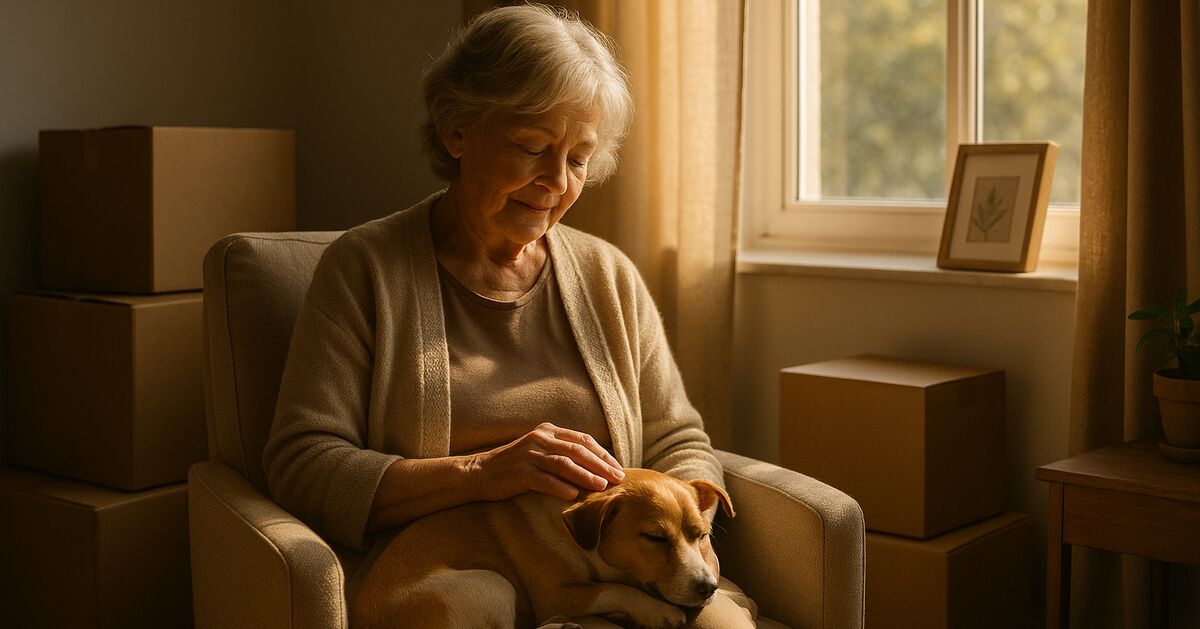
Pets are not an afterthought in a senior move, and families who treat them as one almost always regret it.
For many older adults in Sarasota, a dog, cat, or even a bird is the single most important relationship in their daily life. That companion gets them up in the morning, gives them a reason to walk around the block, and provides comfort during the long quiet hours that retirement can bring. When you start planning a move, the pet question cannot sit at the bottom of the checklist. It belongs near the top, alongside lease agreements, medical records, and floor plans.
This post walks through every part of moving a senior with a pet: what can go wrong, how to prevent it, and why the emotional stakes are higher than most families expect.
Why pets matter so much to seniors
Research consistently shows that pet ownership among older adults is connected to lower blood pressure, reduced feelings of loneliness, and a stronger sense of daily purpose. None of that is surprising to anyone who has watched an 80-year-old greet their dog after a short errand. The animal does not know the person is aging, frail, or grieving. It just shows up, tail wagging, every single time.
What this means practically is that threatening a pet's place in the household, even unintentionally, threatens the senior's sense of stability. A senior who is already anxious about leaving a home of 30 years will become significantly more distressed if they are also uncertain whether their cat can come along. Address the pet question first, clearly, so that one fear can be set aside while you work through the rest.
Start with the new community's pet policy, not at the end
This is the most common mistake families make. They tour assisted living communities, independent living apartments, or 55-plus neighborhoods in places like Lakewood Ranch, Gulf Gate, or Nokomis, fall in love with a particular place, sign the paperwork, and then discover the community either does not allow pets or has restrictions the senior cannot meet.
Pet policies across Sarasota County vary enormously. Some independent living communities welcome cats and small dogs under a certain weight with no extra fee. Others charge a one-time pet deposit, a monthly pet rent, or both. A number of memory care and skilled nursing facilities do not permit personal pets in resident rooms at all, though they may have community therapy animals.
Before any community goes on the shortlist, ask these questions directly:
- Are pets allowed in individual units or rooms?
- What species and breeds are permitted?
- Is there a weight limit? (Many communities cap at 20 or 25 pounds.)
- Is there a pet deposit, and is it refundable?
- Is there a monthly pet fee?
- Who is responsible for the pet's care if the resident is hospitalized?
- Are there designated outdoor areas for dogs?
- What happens to the pet if the resident moves to a higher level of care within the same campus?
That last question matters more than families realize. A senior might move into an independent living apartment with a dog, then need assisted living two years later. The assisted living wing may have a different policy. Get the answer in writing before you commit.
If you are working with Sarasota Senior Moves for your family's transition, our team can help you think through these questions before you fall in love with a community that ultimately cannot accommodate a beloved dog.
What moving day stress looks like in animals
Humans are not the only ones who find moving stressful. Cats especially, and many dogs, are highly sensitive to disruption in their environment. Packing boxes, strangers moving through the house, furniture disappearing, and then a car ride to an unfamiliar place can trigger behavioral changes that last days or even weeks.
Common signs of stress in pets during a move include:
- Hiding or refusing to eat
- Excessive vocalization (howling, meowing)
- Accidents outside the litter box or usual bathroom area
- Aggression toward people or other animals
- Lethargy or loss of interest in play
For cats, the move itself is often harder than it is for dogs. Cats are territorial, and moving takes them out of a territory they have mapped completely. Dogs tend to bond more to people than to places, so they recover faster once they see their person is safe.
What helps most:
Keep the pet's routine as unchanged as possible on both sides of the move. Feed at the same time. Use the same bowls, the same bed, the same toys. If possible, bring the pet to the new home after the furniture is in place and some familiar scents are already in the space, rather than carrying them into an empty room with echoing floors.
For very anxious cats, your veterinarian may recommend a short course of anti-anxiety medication or a calming diffuser. It is worth a quick call to the vet before moving day rather than dealing with a stressed, hiding animal in an unfamiliar place.
The logistics of moving day with an animal
On moving day itself, an animal underfoot is both a safety concern and a source of additional stress for everyone. Movers are going in and out, doors are open, and there are plenty of opportunities for a frightened pet to dart outside.
The simplest solution is to keep the pet out of the main activity entirely on moving day. Options include:
- A trusted friend or neighbor who can keep the pet at their home
- A local boarding facility for a day or two
- A cat or dog sitter who comes to the senior's home and keeps the pet in one closed room
If the senior finds it very upsetting to have the pet out of sight during the move, consider having a family member stay with the senior and the pet in a quiet location, a nearby park, a coffee shop, or even a hotel, while the move proceeds. This serves two purposes: the pet stays calm and contained, and the senior gets a gentler introduction to the new space (arriving to a furnished home rather than watching boxes carried out the door).
When you bring the pet into the new home, do a walk-through with the senior together. Let the animal explore while the senior narrates, quietly, where things are. The familiar voice is calming for both of them.
When a pet cannot go to the new community
Sometimes, despite everyone's best efforts, the new living situation genuinely cannot accommodate the pet. This happens most often when a senior moves directly from home to memory care or skilled nursing, where personal pets are rarely permitted.
This is one of the hardest conversations in senior care, and there is no gentle trick that makes it painless. What matters is honesty, time, and involving the senior in the solution rather than presenting them with a decision already made.
Talk through options together:
- A family member takes the pet. This is almost always the most comforting option for the senior, because they know their animal is safe and may be able to visit. Be realistic about whether the family member can truly commit long-term.
- A trusted friend or neighbor. Some seniors find this even better than a family arrangement, because the pet stays in a familiar neighborhood and the senior already has a warm relationship with the caretaker.
- A rehoming network. If neither of the above is possible, responsible rehoming through a local rescue or a network of vetted adopters is far better than a rushed surrender. Sarasota County has several rescue organizations and breed-specific groups that can help find a suitable home.
- Hospice pet programs. If a senior is in hospice or end-of-life care, ask the hospice provider whether they have a pet foster or visitation program. Several do, and reuniting a senior with their animal, even briefly, can be deeply meaningful.
The process of letting go of a pet is a grief experience. It deserves the same care and space you would give any other loss. For more on the emotional side of what seniors carry into a move, the post on how to downsize a lifetime of belongings when everything feels too important to let go speaks to this directly.
Sarasota-area specifics worth knowing
If your senior is moving within the area and keeping their pet, a few local details are worth knowing.
Outdoor access. Many communities near the coast, including those on Longboat Key, Lido Key, and Casey Key, have specific rules about pets on shared grounds or near the waterfront. Some beach communities restrict pets on certain paths or require leashes in common areas. Ask before you assume.
Veterinary continuity. If the new home is in a different part of the county, for example, a senior moving from Fruitville to Englewood or from North Port to Osprey, the drive to their longtime vet may no longer be practical. Help them identify a new vet near the new address before the move, and bring a copy of the pet's vaccination and medical records on moving day. This is easy to forget in the chaos.
Heat and humidity. Sarasota's climate is genuinely hard on older animals. If the move is happening in summer, be careful about time spent outdoors during transport. Short-nosed breeds like bulldogs and Persian cats are especially vulnerable. Keep travel times brief and make sure air conditioning is working at the new home before the pet arrives.
For families in Bee Ridge or Lakewood Ranch where some communities are larger campuses, ask specifically about the distance from the senior's unit to outdoor pet areas. A 92-year-old with a small dog should not have to walk a long corridor to reach grass.
How to help a senior who is grieving a pet they cannot keep
If your senior is losing their pet as part of this move, do not minimize it or rush them through the feelings. Comments like "it's just a dog" or "you'll feel better once you're settled" are well-meaning but unhelpful. The animal represents companionship, routine, purpose, and often a connection to a spouse or chapter of life that is already gone.
What actually helps:
- Let them talk about the pet as much as they need to. Ask about the animal's history, favorite habits, funny moments.
- Help them stay connected to the new owner if possible. Regular photos or a short video can make a real difference.
- Once the senior is settled, explore whether therapy animal visits are available at the new community. Many do offer this.
- Give it time before suggesting a new pet. For some seniors, a new animal is genuinely comforting after a period of adjustment. For others, it feels like replacing something irreplaceable. Follow their lead.
The guide on helping your Sarasota senior feel at home from the very first night covers the broader emotional landscape of those first days in a new space, and much of it applies equally when a pet is part of the picture.
How a senior move manager can help with pet logistics
Part of what a senior move manager does is carry the details that fall through the cracks when a family is managing everything at once. Pet arrangements are exactly the kind of thing that can feel like it should be simple but then, on moving day, turns out to be anything but.
A move manager can help you:
- Add pet policy questions to your community research checklist early in the process
- Coordinate a pet sitter or boarding arrangement for moving day
- Make sure the veterinary records are packed with the senior's personal documents, not buried in a box
- Set up the pet's corner of the new home as one of the first tasks, so the animal has a familiar spot immediately
- Remind the family to pick up pet food, litter, and supplies for the new location before moving day
Families in Gulf Gate or Laurel who are managing this from a distance find this kind of coordination especially valuable. You cannot always be on the ground to notice that nobody arranged for the cat during the move.
If you have questions about what this process looks like in practice, our frequently asked questions page covers many of the common concerns families bring to us, and you are always welcome to reach out to us directly with something specific to your situation.
The bottom line
A pet is not a logistical complication to be managed at the end of a move. For your senior, it may be the most important relationship in their daily life, the thing that gets them out of bed with a sense of purpose, and a living connection to the home they are leaving.
Handle the pet question early, carefully, and with the same seriousness you bring to lease agreements and medical records. Ask about policies in writing. Keep routines intact wherever possible. And if the pet cannot come along, give that grief its proper place instead of rushing past it.
Seniors who feel that their animal companion was respected and cared for during a move settle into their new home faster and with far less anxiety. That is not sentiment. It is simply what families report, over and over, when everything went right.