Help your Sarasota senior feel at home from the very first night
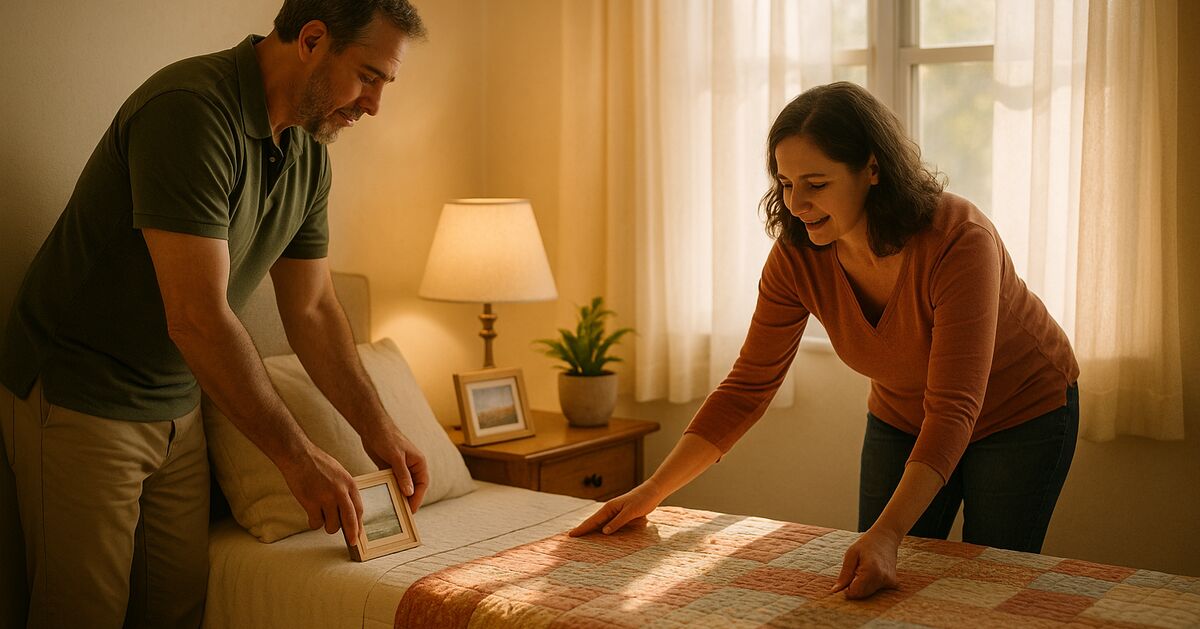
The boxes are gone, the furniture is in place, and the keys have changed hands. So why does your mom still feel like she's staying in a hotel?
Getting a senior moved and getting a senior settled are two completely different things, and families who confuse the two often wonder why their loved one seems lost, anxious, or sad weeks after a move that went perfectly well on paper. The good news is that feeling at home is not a mystery. It is a craft, and it is one you can practice intentionally, starting before the moving truck even pulls away.
This post walks through exactly how to do that, room by room, day by day, and feeling by feeling.
Why "settled" feels so different from "moved in"
Home is not a floor plan. It is the smell of familiar coffee in the morning, the lamp that casts the right kind of light at night, the drawer where the scissors always live. When seniors move, especially after decades in one place, they lose all of those invisible cues at once. The body and brain that have been navigating that old space on autopilot suddenly have to work hard for every small task.
That effort is exhausting and, for many seniors, quietly distressing. Disorientation after a move is extremely common. It can look like confusion, withdrawal, or even what families sometimes mistake for early cognitive decline. In most cases it is simply the brain recalibrating to a new environment, and the right setup can dramatically shorten that adjustment period.
This is also one of the core reasons that working with a senior move manager in Sarasota County is so different from hiring a standard moving company. The goal is not just to transport belongings. It is to reconstruct the feeling of home on the other end.
Start with the bedroom, not the living room
Most families make a natural mistake: they spend the first day arranging the living room and kitchen because those are the rooms guests will see. The bedroom gets done last, when everyone is tired.
Flip that priority. The bedroom is where your senior will spend the first night alone in an unfamiliar place, probably in the dark, possibly disoriented. It needs to be fully functional and familiar before anything else.
A few specifics that matter more than you might expect:
- The bed should face the same direction it did before, if at all possible. When your dad wakes up at 2 a.m. and needs the bathroom, his body will instinctively turn the way it always has. If that direction now faces a wall, the confusion is immediate and can cause falls.
- Nightstands on the same sides. Phone, water glass, glasses case, whatever lived on the left side should live on the left side again.
- The same bedding. Even if the comforter is old and you have a beautiful new one picked out, this is not the week to introduce it. Familiar textures and smells are deeply calming.
- A working lamp within easy reach before bedtime on night one. Not a ceiling light that requires finding a switch on an unfamiliar wall.
This kind of thoughtful room-by-room planning is exactly what a professional move manager coordinates during the setup day. If you are handling this yourself, write it down as a checklist before the move so it does not get lost in the chaos.
Bring the smells, sounds, and light
Sensory familiarity is underrated. The brain recognizes home through far more than visuals.
Smell is processed through the limbic system, which is also where emotional memory lives. If your loved one has always had a particular candle, a bar of the same soap, or even just a familiar brand of laundry detergent on their sheets, bring those things. Do not swap them out for "nicer" alternatives right now.
Sound matters especially in new senior living communities. Many residents in Englewood, Lakewood Ranch, and Osprey who move from quiet single-family homes find community living surprisingly loud, hallway conversations, HVAC hum, neighbors' televisions. A small white noise machine or a familiar tabletop radio playing the same station they always listened to can be a genuine comfort.
Light is often overlooked. If your loved one had warm-toned lamps throughout a Longboat Key or Lido Key home, a new apartment with cool overhead fluorescents will feel clinical and wrong even if every piece of furniture is in place. Bring at least one or two familiar lamps and plug them in on day one.
Unpack the "anchors" first
Every person has a handful of objects that function as emotional anchors: things that say this is my space in a way that nothing else does. It might be a framed photograph of grandchildren, a particular ceramic bowl that has sat on every kitchen counter for forty years, a religious object, a clock, a plant.
Identify those anchors before the move, ideally with your loved one's direct input. Then make sure those items are packed last (so they are first off the truck) and placed first in the new space. Do not let them get buried in a box of miscellaneous kitchen items.
If you are not sure what your loved one's anchors are, ask directly: "If you could only bring five things that would make the new place feel like yours, what would they be?" The answers are often surprising and almost always revealing.
For families working through the larger question of what comes and what does not, our post on what happens to belongings a Sarasota senior can't take to their new home covers that sorting process in detail.
Set up the kitchen for independence on day one
A senior who can make their own cup of tea or find their own snack without asking for help has had a fundamentally different first day than one who has to wait for someone to locate things for them. Independence, even in small tasks, is directly connected to a sense of belonging.
Before you leave on day one, make sure:
- The most-used dishes, glasses, and utensils are in accessible spots (not upper cabinets that require a step stool)
- The coffee maker or kettle is on the counter and ready to use
- A few familiar groceries are stocked, the brands they actually prefer
- Medications are in the spot where they will live long-term, not temporarily on the counter
For seniors moving into assisted living or memory care communities in areas like Gulf Gate, Fruitville, or North Port, the kitchen may be communal. In that case, the equivalent is making sure the small personal space (a mini-fridge, a shelf, a bedside table) is stocked with the things that give them agency. A box of their preferred crackers. Their own brand of hand lotion. Small things, big message.
Do a "first morning" walkthrough together
If you can stay the first night or arrive early the next morning, walk through the space with your loved one the way they would actually use it in real time. Not a tour, but a practice run.
Where will they sit for morning coffee? Walk there with them. Where is the bathroom light switch from the bedroom in the dark? Practice it. How does the thermostat work? Go through it together. Where will the mail go?
This is not about doubting their competence. It is about building new muscle memory as quickly as possible, and doing it together makes it feel like an adventure rather than an ordeal.
For seniors with memory challenges, this kind of spatial orientation is especially important. Our compassionate guide to downsizing a senior with dementia goes into more depth on how to approach a new environment when cognitive changes are part of the picture.
Introduce the community, slowly
If your loved one is moving into a senior living community, whether in Lakewood Ranch, Nokomis, Casey Key, or anywhere else in the county, the social side of settling in matters just as much as the physical setup.
But there is a real risk of overdoing it in the first week. Well-meaning families sometimes sign their parent up for every activity, drag them to every meal in the dining room, and introduce them to every neighbor in rapid succession. The result can be overwhelming rather than welcoming.
A gentler approach tends to work better:
- Identify one activity that genuinely matches their existing interests. Not "they should try things." Something they already enjoy.
- Eat one meal a day in the communal dining room for the first week, not all three.
- Let them choose when to socialize and when to have a quiet evening in their own space. Having the choice matters.
A good community's staff will often have a new-resident ambassador program or a staff member assigned to help with the social transition. Ask about it directly when you are evaluating communities. Our guide on how to choose the right senior living community in Sarasota County covers what to look for in that vetting process.
Plan for the second week, not just move day
The adrenaline of move day carries a lot of people through the initial transition. It is often the second week when reality sets in, the family visits less, the novelty wears off, and the senior is alone with an unfamiliar space for the first time.
Plan for that week deliberately:
- Schedule at least two or three visits or phone calls, even brief ones.
- Ask specific questions rather than "how are you settling in?" Try: "What did you have for breakfast?" or "Have you figured out where you like to sit in the afternoon?" Concrete questions are easier to answer and reveal more.
- Notice what is and is not working, and make small adjustments. Maybe the reading chair needs to move closer to the window. Maybe the television needs to be louder. These are easy fixes that signal you are paying attention.
If something feels genuinely off, trust that instinct. A senior who seems persistently disoriented, withdrawn, or distressed weeks after a move may need support beyond furniture arrangement. Talk to their doctor, and consider whether additional in-home support might help during the transition.
What a senior move manager does that families often cannot
Families love their seniors deeply and work hard. But there is a particular skill set involved in setting up a new space so that it feels like home rather than a staged approximation of one.
A professional senior move manager will often spend time with the client before the move, learning which objects matter most, how the old home was organized, and what sensory details are important. They will handle the physical setup with all of that information in hand, placing things not just logically but familiarly.
They will also run the logistics of move day so that family members can be emotionally present rather than managing boxes. That shift matters more than it sounds.
You can learn more about how this process works and what to expect at our FAQ page, or read about what a senior move manager actually does differently from a standard mover.
We serve families throughout Sarasota County, including Bee Ridge, Casey Key, Englewood, Fruitville, Gulf Gate, Lakewood Ranch, Laurel, Lido Key, Longboat Key, Nokomis, North Port, and Osprey. Whether the move is across the county or down the street, the goal is always the same: not just moved, but truly home. You can reach out to us any time to talk through what your family's situation looks like and how we can help.
The small things add up to something big
There is no single gesture that makes a new place feel like home. It is always a collection of small things: the right lamp in the right corner, the familiar bowl on the counter, the morning routine that transfers from one address to another, the neighbor whose name you now know.
What all of those small things have in common is that someone took the time to think about them. That is what your loved one will remember. Not the floor plan. Not the view. The fact that someone cared enough to make it feel like theirs.
That is a gift worth giving carefully.