When a Sarasota senior's home hasn't been updated since the
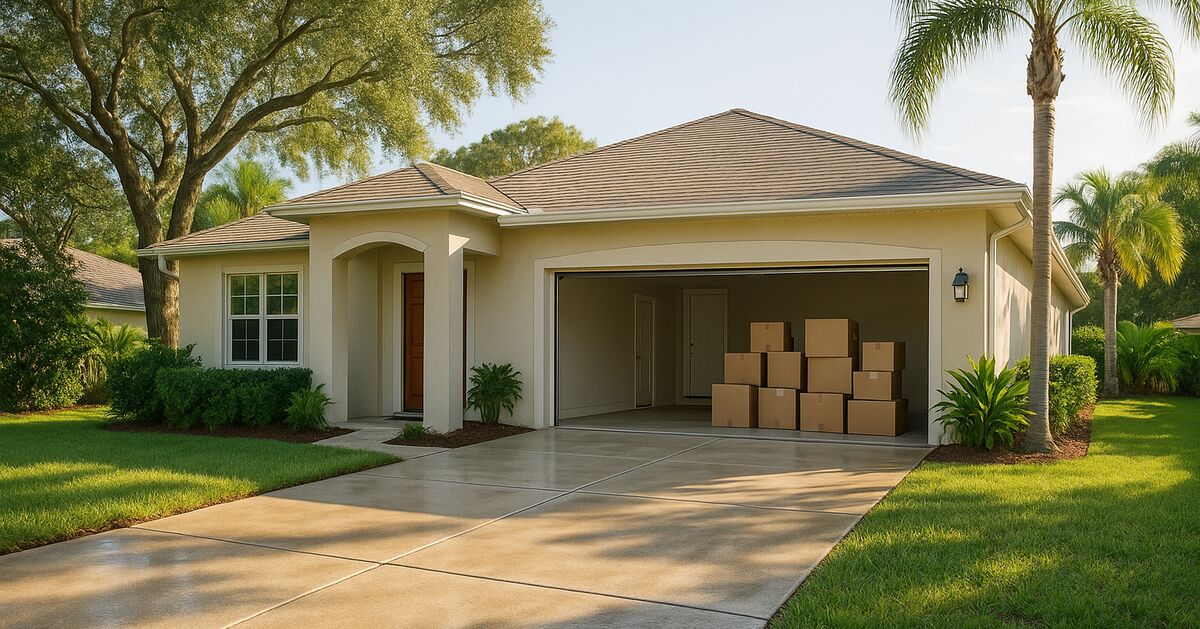
Forty years of memories are worth something, but forty-year-old polybutylene pipes and popcorn ceilings are not selling points. If your family is preparing a Sarasota-area home for listing and the last major update happened sometime during the Reagan administration, you are facing a very specific challenge: figuring out what to fix, what to leave alone, and how to do all of it while a senior is either still living in the house or has just moved out.
This guide walks through that process in plain, practical terms.
Why 1980s homes in this area need a clear-eyed assessment first
Sarasota County grew fast in the late 1970s and throughout the 1980s. Subdivisions spread through what are now established neighborhoods in Bee Ridge, Fruitville, Gulf Gate, and Laurel. Many of those homes were well-built for their time, with concrete block construction that holds up well in Florida's climate. The bones are often sound.
The problem is that "sound bones" and "ready to list" are two different things. Buyers in today's Sarasota market have choices. They can see a hundred homes online before they visit one in person. When they walk into a home that still has original 1980s carpet, brass fixtures, laminate countertops, and a galley kitchen with oak cabinets, they mentally mark it as a project house and offer accordingly, even if the structure itself is perfectly solid.
Before your family spends a dollar on improvements, you need a clear picture of what you are actually dealing with. That means two things: a pre-listing home inspection and an honest conversation with a real estate agent who specializes in the local market. Do both before you commit to any renovation work.
The inspection: what to look for in a home this age
A licensed home inspector will flag the obvious things, but when you are dealing with a home built in the 1980s, there are specific systems worth paying close attention to.
Plumbing. Many Florida homes built in the late 1970s and through the mid-1990s used polybutylene pipe, which is known to fail and is considered uninsurable by some carriers. If the home has it, buyers will either walk or demand a significant price reduction. Repiping with CPVC or PEX is a real cost, but it is often a better investment than trying to sell with polybutylene in place. The Florida Department of Business and Professional Regulation licenses plumbing contractors, and getting two or three competitive bids before committing is wise.
Electrical panels. Federal Pacific and Zinsco electrical panels, which were common in this era, are widely reported by home inspectors as having safety concerns; check with a licensed inspector or the CPSC for details. Some Florida insurers may decline to cover homes with these panels, which can complicate a sale, so check with an insurance agent before listing. The U.S. Consumer Product Safety Commission has published information on panel-related hazards. If the home has one of these panels, replacing it before listing removes a major obstacle.
Roof age. Florida insurers pay close attention to roof age. A roof older than 15 to 20 years may be harder to insure in Florida, and buyers who cannot get insurance may not be able to close, so it's worth having a roofer assess it early. If the roof is original or was last replaced more than 15 years ago, get a roofing contractor to assess it before the listing goes live.
HVAC systems. A 1980s air conditioning system is almost certainly gone by now, but if a replacement system is also aging (over 12 to 15 years old), buyers will factor that into their offer. Modern high-efficiency HVAC systems generally offer energy savings compared to older equipment, which can be a selling point worth mentioning.
Asbestos and lead paint. Homes built before 1978 may have lead-based paint, and the EPA's Renovation, Repair, and Painting Rule requires specific disclosures and handling procedures. Many 1980s Florida homes used asbestos-containing materials in floor tiles, textured ceilings, and insulation. A certified inspector can test for both. Disclosure is legally required and handling these materials improperly creates liability.
The renovation question: what is actually worth doing?
This is where families often make costly mistakes. The instinct is to update everything, make the home look "brand new," and capture a top-dollar sale. But over-improving a home in a given neighborhood is a real risk. If comparable homes in the area are selling for $350,000, spending $80,000 on a full kitchen and bath renovation will not get you $430,000.
A real estate agent with strong local knowledge can show you what buyers in that specific neighborhood actually expect. What sells in Lakewood Ranch is different from what sells in Englewood. What moves quickly near Gulf Gate may not be what buyers are looking for out near Nokomis or North Port.
As a general framework, here is how to think about it.
Fixes that protect the sale (do these):
- Resolve any issues that will appear on the inspection report and give buyers leverage to renegotiate
- Replace or repair systems that affect insurability (roof, electrical panel, plumbing)
- Remediate any code violations or unpermitted work
- Address anything that is a safety hazard
Cosmetic updates that are usually worth it:
- Fresh neutral interior paint throughout (high return, low cost)
- Replacing original carpet with a clean, neutral option or having hardwood floors refinished
- Updating light fixtures and switch plates (inexpensive and visually impactful)
- Pressure washing the exterior, driveway, and walkways
- Basic landscaping cleanup and fresh mulch
Updates that are often over-investments:
- Full kitchen remodels
- Complete bathroom gut-and-remodel jobs
- Swimming pool resurfacing unless the pool is visibly deteriorating
- Replacing all windows unless they are genuinely failing
The sweet spot is a home that is clean, safe, and neutral, not a home that has been renovated to your taste at significant expense.
Working around the senior's timeline
One reality that families in this situation often underestimate is how long pre-listing work takes when a senior is still living in the home, or when the home has been a senior's residence for decades and is full of a lifetime of belongings.
Contractors cannot work efficiently around furniture, boxes, and a full household. And if the senior is still in residence during the work, the disruption, noise, and strangers in the home can be genuinely distressing. Our team at Sarasota Senior Moves works closely with families to coordinate the timing of the move, the clearing of belongings, and the start of any renovation or repair work so that contractors can get in and get out efficiently.
If the senior is moving to a community or another home first, the pre-listing work becomes much more manageable. If the senior is staying until the home sells, the planning has to be more careful. Either way, having a clear sequence matters. Trying to stage a home, list it, and do repair work simultaneously is a recipe for delays and frustration.
You may also find it helpful to read our post on moving a Sarasota senior out of a flood- or evacuation-zone home, which covers some overlapping timing and logistics challenges.
What buyers in today's Sarasota market actually expect
Sarasota County's real estate market has attracted buyers from across the country, many of them retirees themselves with significant equity from the sale of northern homes. These buyers are often sophisticated and have seen plenty of properties. They can spot deferred maintenance, and they know what a "needs work" discount looks like.
That said, the market also includes buyers who specifically want a project, who want to put their own stamp on a home, and who are willing to pay fair value for a home that is priced honestly. There is nothing wrong with selling a 1980s home as-is if it is priced to reflect its condition and the disclosure is complete and accurate. The mistake is pricing as if the home were updated when it is not.
Your agent will guide you on pricing strategy. What the senior move management process addresses is everything that happens before the home goes on the market: the sorting, the clearing, the coordination with contractors, and making sure the home is presented in the best possible light given the budget and the timeline.
The belongings issue and why it matters for renovation work
A home that has been lived in for 30 or 40 years typically has a great deal of furniture, clothing, collectibles, paperwork, tools, and general accumulation. Before a single contractor sets foot in the house, that home needs to be cleared to a point where work can actually happen.
This is not a small task. Families who try to handle it in a weekend consistently find it takes weeks. Items need to be sorted into what goes with the senior, what goes to family members, what can be donated, what can be sold, and what needs to be disposed of. Our frequently asked questions page covers how a senior move manager approaches this process, including how we work alongside families rather than instead of them.
Clearing the home also reveals things that inspectors and renovation crews need to see: the state of the floors under area rugs, the condition of walls that were hidden by furniture, and sometimes deferred maintenance that had simply been living behind closed doors for years.
Local contractors and coordination
One thing families relocating from out of state often ask is how to find reliable local contractors. The honest answer is that referrals matter enormously. Florida's contractor licensing is managed by the Department of Business and Professional Regulation, and verifying a contractor's license before signing anything is essential.
A senior move manager who works regularly in a given area often has relationships with vetted contractors and can help coordinate the sequencing of work. This is particularly useful in areas like Englewood or Osprey, where the local contractor market can be tighter than in more densely developed parts of the county.
For families dealing with more complex real estate situations, our post on moving a Sarasota senior out of a home with complicated ownership or title may also be worth reading before you get too far into the listing process.
A realistic timeline to expect
Here is a rough sense of how long pre-listing preparation typically takes for a 1980s home that has been a senior's primary residence for many years.
- Sorting and clearing belongings: 2 to 6 weeks, depending on the size of the home and how much family is available to help
- Inspection and contractor bids: 1 to 2 weeks after the home is cleared enough to assess properly
- Significant repairs (roof, electrical, plumbing): 2 to 6 weeks depending on scope and contractor availability
- Cosmetic updates (paint, flooring, fixtures): 1 to 3 weeks
- Cleaning, staging, and photography: 3 to 5 days
In total, families are often looking at 2 to 4 months between the decision to list and the actual listing date, if the home needs meaningful work. Starting earlier than you think you need to is often the right call.
What to do first
If you are at the beginning of this process, the first step is simply to get clear on what you are dealing with. Walk through the home with a notebook and document what you see. Schedule a pre-listing inspection. Talk to a real estate agent who knows the specific neighborhood. And talk to someone who can help coordinate the logistics of clearing and preparing the home.
You can reach our team through our contact page to talk through your situation. We work with families all across the county, from Casey Key to North Port and everywhere in between, and we are used to working with homes that have a lot of history and need thoughtful preparation before they go to market.
A home that has not been updated since the 1980s is not a lost cause. It is a property that needs a clear plan, an honest assessment, and steady execution. That is entirely doable, and families do it successfully in this area every year.
Sources & further reading
- Polybutylene Pipe and Plumbing Information (Florida Dept. of Business and Professional Regulation)
- EPA Renovation, Repair, and Painting Rule (Lead Paint) (U.S. Environmental Protection Agency)
- Asbestos in the Home: What You Should Know (U.S. Environmental Protection Agency)
- Florida Contractor License Verification (Florida Dept. of Business and Professional Regulation)
Claim-by-claim audit (9 checked)
- “Many Florida homes built in the late 1970s and through the mid-1990s used polybutylene pipe, which is known to fail and is considered uninsurable by some carriers.” (reasoning shown in the article)
- “Federal Pacific and Zinsco electrical panels, which were common in this era, are widely reported by home inspectors as having safety concerns; check with a licensed inspector or th…” (rewritten to what the article can stand behind)
- “Some Florida insurers may decline to cover homes with these panels, which can complicate a sale, so check with an insurance agent before listing.” (rewritten to what the article can stand behind)
- “A roof older than 15 to 20 years may be harder to insure in Florida, and buyers who cannot get insurance may not be able to close, so it's worth having a roofer assess it early.” (rewritten to what the article can stand behind)
- “Modern high-efficiency HVAC systems generally offer energy savings compared to older equipment, which can be a selling point worth mentioning.” (rewritten to what the article can stand behind)
- “Homes built before 1978 may have lead-based paint, and the EPA's Renovation, Repair, and Painting Rule requires specific disclosures and handling procedures.” (cited → epa.gov)
- “Many 1980s Florida homes used asbestos-containing materials in floor tiles, textured ceilings, and insulation.” (cited → epa.gov)
- “Disclosure is legally required and handling these materials improperly creates liability.” (reasoning shown in the article)
- “Florida's contractor licensing is managed by the Department of Business and Professional Regulation, and verifying a contractor's license before signing anything is essential.” (cited → myfloridalicense.com)