Moving a Sarasota senior into memory care: how room-size
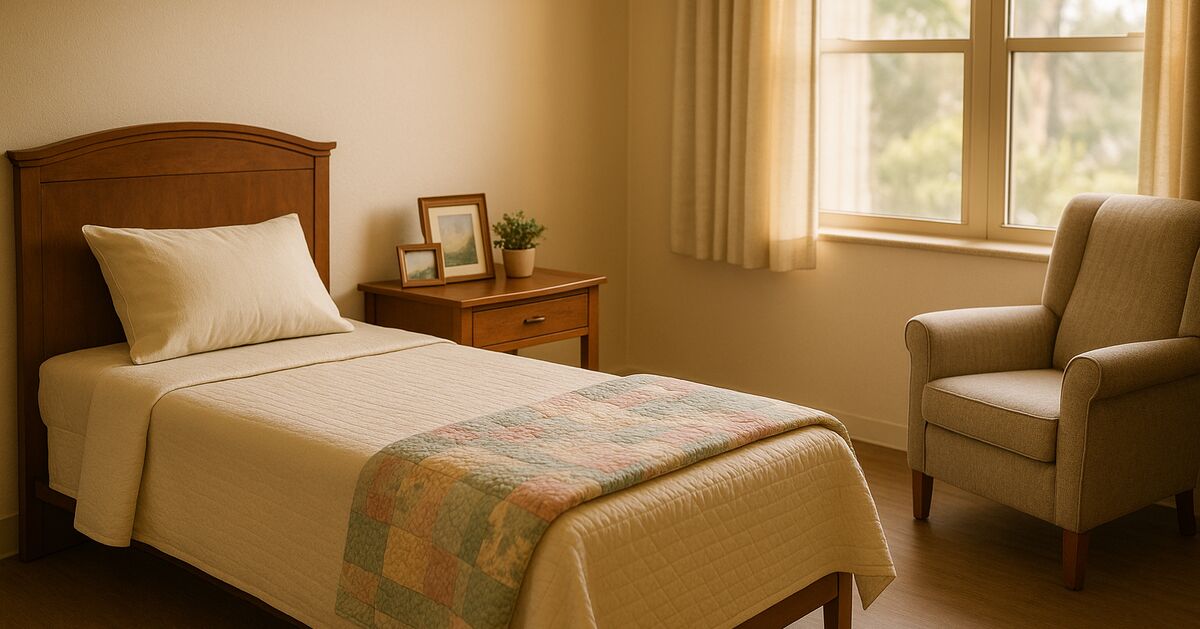
A memory care room can stop a family cold the first time they walk in and try to picture their parent's lifetime of belongings fitting inside it.
The room is not a studio apartment. It is not even a generous hotel room. It is a carefully sized, safety-designed space, Rooms are often quite small, and exact sizes vary by facility, so it's best to confirm the specific square footage with the admissions coordinator., and the physical constraints are not negotiable. The building was permitted that way, the furniture clearances are built around fall-prevention, and the facility's infection-control protocols often restrict certain materials and soft goods. Families who arrive without a clear plan, and without honest conversations beforehand, frequently find themselves making agonizing, last-minute decisions in a hallway on moving day.
This post is about preventing that. It covers why memory care rooms are the size they are, what the space reality means for decision-making, and how families across Sarasota County, from Lakewood Ranch to Englewood to Longboat Key, can work through this process with far less regret.
Why memory care rooms are deliberately small
This is not a cost-cutting trick. There are genuine clinical reasons why memory care living spaces are compact and highly controlled.
Many dementia care experts observe that people living with dementia can become disoriented by too many visual stimuli or unpredictable furniture arrangements. Smaller, consistent, familiar-looking environments reduce what clinicians call "environmental load," which refers to the cognitive work a person has to do just to make sense of their surroundings.
The Florida Agency for Health Care Administration (AHCA) licenses and inspects memory care facilities in the state and sets minimum standards for resident room sizes, safety features, and the physical plant overall. Those standards exist to protect residents. The clearances around beds, the turning radius for wheelchairs and walkers, the absence of throw rugs, the limits on furniture with sharp corners or unstable legs: all of it is code-driven and clinically justified.
What this means practically is that a room your parent will actually be safe in simply does not have space for a six-drawer dresser, a recliner, a side chair for visitors, a bookcase, a floor lamp, and a curio cabinet full of figurines. Families need to accept that before they begin packing, not while they are unloading a moving truck.
The furniture reality: what typically fits and what does not
Every facility is different, and families should ask the admissions coordinator for a room diagram with dimensions before they make a single decision about what to keep. That said, there are patterns that come up again and again.
What commonly fits in a private memory care room:
- One twin or full-size bed (some facilities require their own bed frames for safety rail compatibility)
- One bedside table or nightstand
- One comfortable chair, either a recliner or a wingback, depending on clearance
- One small dresser (often three drawers, not six)
- A small television, usually wall-mounted by the facility
- A few framed photos and a small number of meaningful objects on a shelf or windowsill
What commonly does not fit:
- King or queen beds (some facilities permit a full, but many use twin-XL bed frames)
- Large armoires or entertainment centers
- Dining or kitchen furniture
- Multiple seating pieces
- Floor lamps with cord trip hazards
- Bookcases or large shelving units
- Collections displayed in cases or on multiple surfaces
This list will feel brutal to families who are coming from a home where the living room alone has more furniture than the list above. That is normal. The grief is real. But the constraints are real too.
The emotional weight of "what do we do with the rest?"
Here is what families are rarely prepared for: the decisions about what does not go into the room are often harder than the decisions about what does go in.
A senior's belongings are not just objects. The china cabinet that came over from a grandparent's house in Ohio, the golf trophies from thirty years of weekend games, the sewing machine that was used to make grandchildren's Halloween costumes: these things carry identity. When a person is losing memory, their belongings can feel like the last external evidence of who they are and who they were. Asking a family to sort through all of it under time pressure, while simultaneously managing a medical transition, is genuinely one of the hardest things families go through.
The common mistake that comes up again and again is waiting too long to begin this process. Families sometimes assume they can sort through the home after their parent is settled in memory care. In practice, the home often needs to be prepared for sale or lease relatively quickly, and the emotional bandwidth families have after a difficult move is very limited. Starting the sorting process before move-in day, even if the decisions are hard, often produces better outcomes.
If the family is also dealing with a home that has years of accumulated belongings, our post on how to handle a storage unit full of belongings no one has seen in years covers strategies that apply equally well to a house full of decades-old keepsakes.
What to bring that actually helps a memory care resident
Many dementia care professionals suggest a few categories of objects that tend to support wellbeing and orientation as memory declines.
Photographs with labels. A small grouping of framed photos, ideally with names and dates written on the back or on a small label, helps staff connect with the resident and helps the resident on good days. Large gallery walls are generally too visually busy, but three to five meaningful photos at eye level can be grounding.
A familiar textile. A beloved quilt, a soft throw blanket, or a favorite pillow from home brings sensory comfort. Facilities typically allow these as long as they are washed and in good condition.
One or two objects tied to a lifelong interest. A small piece of pottery if the resident was a potter. A framed program from a favorite musical if they loved theater. A single well-chosen object communicates something real about the person to every caregiver who enters the room.
A clock and a simple calendar. Orientation aids are genuinely helpful for people in early to middle stages of dementia. A large-face clock and a whiteboard or simple calendar visible from the bed support daily orientation.
Familiar music. This is not a physical object, but a small tablet or simple music player loaded with the music of their young adulthood is one of the most powerful environmental supports available. Many caregivers and clinicians report that music can be a powerful tool for connecting with people living with dementia. A caregiver who knows a resident's favorite era of music has a tool that medication cannot replicate.
How decisions get made when a senior cannot participate
When a parent or grandparent has progressed to the point where they cannot reliably express preferences, the family has to make decisions on their behalf. This is where clear communication between siblings and other family members matters enormously.
Disagreements about what to keep, what to sell, and what to donate become much harder when the person whose belongings are being sorted cannot weigh in. If you are in a situation where siblings or other family members are involved, thinking through the decision-making process before the move is far better than navigating conflict on moving day.
Our senior move management team works with families to establish a simple framework before the sorting begins: identify the "definite keeps" for the room, identify the "definite keeps" for family members who want specific heirlooms, and then address everything else as a separate category to be handled through donation, estate sale, or other means.
For families in communities like Lakewood Ranch or Fruitville where the family home may be a larger property with many years of accumulated belongings, this pre-move sorting phase can take several days and genuinely benefits from professional support.
The logistics of moving day itself
Memory care move-ins are not like typical moves. Many facilities ask that move-ins happen on a specific day and within a specific window of time, to minimize disruption to other residents. Some prefer that the room be fully set up before the resident arrives, so that walking through the door feels like arriving somewhere already familiar rather than a construction zone.
This means families need to be organized before they arrive at the facility. The furniture needs to be ready to place. The photos need to be ready to hang. The bed needs to be made with familiar linens before the resident sees the room.
For families managing a move from a waterfront property or a larger home, the timing and logistics become even more complex. Our post on moving a Sarasota senior out of a flood- or evacuation-zone home covers some of the overlapping logistics challenges that come with higher-value or more complex properties.
Families coordinating moves from communities like Englewood, Osprey, or Gulf Gate should factor in realistic drive times and confirm with the facility whether there is a loading dock or elevator reservation process, especially for larger furniture pieces.
What happens to the furniture that does not go
This is the question families avoid until they are standing in a hallway with a six-drawer dresser that has nowhere to go.
The realistic options are:
- Family members take pieces they want. This works well when coordinated in advance and when family members have agreed on who gets what before moving day.
- Estate sale or consignment. Furniture with genuine value can often be sold through a reputable local estate sale company or consignment shop. This takes planning and lead time.
- Donation. Organizations like Goodwill, Habitat for Humanity ReStores, and local charitable thrift shops accept furniture in good condition. Some offer pickup, though scheduling can take a week or more.
- Junk removal. For furniture that is worn, damaged, or simply not wanted by anyone, a junk removal service handles the physical work quickly.
The important point is that each of these paths requires time and coordination. None of them work well when they are being arranged on moving day itself.
If the senior's home is being prepared for sale after the move, the process of clearing it efficiently connects directly to the real estate timeline. Families dealing with that combined pressure can find useful framing in our post on selling a waterfront home on Longboat Key or Casey Key without rushing and losing money, which addresses the tension between emotional timelines and market readiness.
Local context: memory care options across Sarasota County
Sarasota County has a range of memory care facilities, from smaller residential-style homes to larger licensed facilities within continuing care retirement communities. The physical size and configuration of individual rooms varies meaningfully between facilities, which is why getting an actual room diagram before you begin sorting is so important.
Families in communities like Casey Key, Lido Key, and Longboat Key are sometimes managing moves from high-value waterfront properties, which adds a layer of real estate complexity to an already difficult personal transition. Families in more inland communities like Bee Ridge, North Port, and Nokomis face slightly different logistics but the same core emotional challenge: a lifetime of things that cannot all fit through one small door.
Regardless of where you are in the county, the work of preparing for a memory care move is genuinely better with support. Our senior move management services cover the full Sarasota area and are specifically designed for transitions like this one, where the practical logistics and the emotional weight are both significant.
A note on timing: do not wait for a crisis
One pattern that comes up repeatedly in memory care moves is that families wait until a crisis forces the transition. A fall, a wandering incident, a hospitalization: these events create urgency that compresses the timeline for every decision. When families have weeks rather than days to prepare, the decisions are more thoughtful, the sorting is more intentional, and the move-in itself is calmer.
If you know that memory care is likely in the future, even if it is not immediately necessary, beginning conversations now about what your parent values most in their belongings, which pieces of furniture matter to them, and what objects carry the most meaning can give you a roadmap that is genuinely useful when the time comes.
You can read through our frequently asked questions for more on how the process works from first conversation to move-in day, or reach out directly if you would like to talk through a specific situation. Every family's circumstances are different, and there is no single right answer, but there is usually a path through.
Memory care moves are hard. The room size makes them harder. But with honest preparation, a clear plan, and the right support, families can get their parent settled into a space that is safe, familiar, and genuinely theirs, even if it is smaller than anyone would have chosen.
Sources & further reading
- Florida Agency for Health Care Administration: Assisted Living and Memory Care Licensing (Florida Agency for Health Care Administration (AHCA))
- Florida Statutes Chapter 429: Assisted Living Facilities (Florida Legislature)
Claim-by-claim audit (5 checked)
- “Rooms are often quite small, and exact sizes vary by facility, so it's best to confirm the specific square footage with the admissions coordinator.” (rewritten to what the article can stand behind)
- “Many dementia care experts observe that people living with dementia can become disoriented by too many visual stimuli or unpredictable furniture arrangements.” (rewritten to what the article can stand behind)
- “The Florida Agency for Health Care Administration (AHCA) licenses and inspects memory care facilities in the state and sets minimum standards for resident room sizes, safety featur…” (cited → ahca.myflorida.com)
- “Many dementia care professionals suggest a few categories of objects that tend to support wellbeing and orientation as memory declines.” (rewritten to what the article can stand behind)
- “Many caregivers and clinicians report that music can be a powerful tool for connecting with people living with dementia.” (rewritten to what the article can stand behind)