What families get wrong about selling furniture
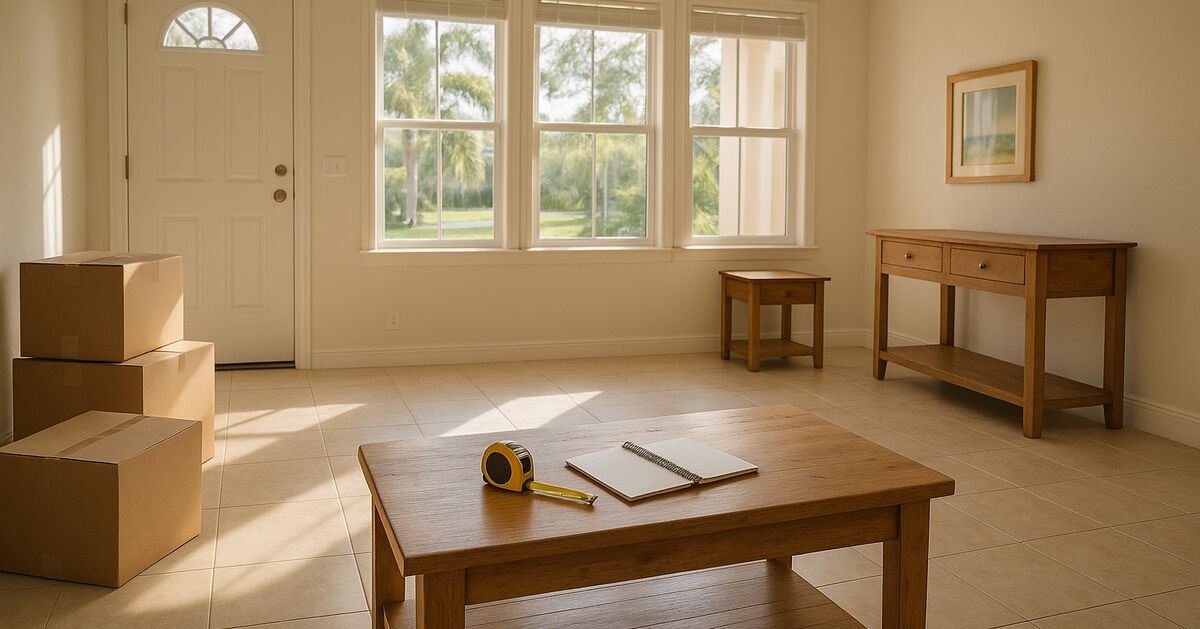
Furniture sells fast in Sarasota, right up until the moment you need it to. That is the quiet trap families fall into when they start clearing a senior parent's home before a move, and it costs them time, money, and sometimes real emotional damage that could have been avoided.
Whether the home is a Gulf Gate ranch house, a Lakewood Ranch villa, or a condo on Lido Key, the same patterns show up. Families act too early, price things wrong, pick the wrong channel to sell, and let sentimental pressure turn good decisions into bad ones. This post walks through each of those mistakes in plain terms, explains why they happen, and gives you a clearer path forward.
Mistake 1: Selling before the new floor plan is confirmed
This is the single most damaging error families make, and it is entirely understandable. When you walk into a home full of decades of furniture and start thinking about a move to a smaller space, the instinct is to start clearing right away. It feels productive.
The problem is that "smaller space" is not a floor plan. Until you have the actual dimensions of the new room or unit, you genuinely do not know what fits. A familiar situation: a family sells a bedroom set, a china cabinet, and two upholstered chairs from a Bee Ridge home before the senior's assisted living placement is finalized. Then the placement falls through, a different community is chosen, and the new suite turns out to be larger. The family ends up buying replacement furniture at retail prices.
The sequence should be: confirm the new space, measure it, create a simple floor plan, decide what goes, and only then sell what is leaving. Our post on moving a Sarasota senior into memory care and how room-size limits force harder decisions goes into this in detail. Room sizes in memory care especially can be surprisingly limiting, but they vary enough that guessing is risky.
Mistake 2: Assuming Sarasota's resale market is uniform
The Sarasota area has several very different resale markets operating at once, and what sells well in one neighborhood may sit unsold in another.
Furniture from a Longboat Key waterfront condo, for example, often reflects coastal contemporary tastes and can find buyers through estate sale companies that specialize in higher-end goods. Furniture from an inland Fruitville home from the 1980s may have less secondary market demand, particularly if it is large, dark wood, traditional American furniture, which many resale sellers report as slower to move these days.
A few things that shape local resale value:
- Condition and age. Sarasota's humidity and sun exposure accelerate fabric fading, wood warping, and finish dullness. Furniture that looks fine to a family may look worn to a buyer.
- Size. Oversized sectionals, California king beds, and armoires do not fit many of the smaller condos and villas that define a large share of the Sarasota senior market. Buyers may want the piece but cannot use it.
- Style trends. Heavy formal dining sets and ornate bedroom suites have a narrower buyer pool than they once did. This is not a value judgment; it is just the current market.
- Provenance and quality. A solid cherry wood piece or a known American furniture brand in good condition can hold real value. An MDF piece from a big-box store, even in good condition, often does not.
Getting a realistic read on value before pricing matters. Consignment shops in Sarasota, estate sale companies, and auction houses that operate locally can give you a sense of what is actually moving. None of that requires a formal appraisal for everyday furniture, but it does require at least a few phone calls before you set prices.
Mistake 3: Defaulting to Facebook Marketplace for everything
Online marketplaces have made selling furniture more accessible, but they are not always the right channel for a senior move situation, and relying on them exclusively creates problems.
The practical friction is real. Buyers message, negotiate, ghost, arrive late, or show up with a car that cannot fit the piece. For a family managing a senior's move from Osprey or Nokomis while also coordinating healthcare decisions and legal paperwork, that back-and-forth is exhausting.
More importantly, the channel should match the item. A well-made piece of furniture that could draw a solid price through a consignment shop or estate sale may sell for far less on Facebook Marketplace because the buyer pool is different. Online resale platforms optimize for speed and convenience, not maximum value recovery. For items where value matters, a different channel usually performs better.
Options worth considering, depending on the situation:
- Estate sale companies. These firms come in, price everything, run a multi-day sale (often on-site), and handle buyer interactions. They typically take a commission out of proceeds, which varies by company, but they remove nearly all the family's labor burden. The National Auctioneers Association maintains a directory of estate sale professionals if you need a starting point.
- Consignment furniture shops. A few operate in the Sarasota area and take quality pieces on consignment, meaning you get paid when the item sells. This works well for higher-value items where waiting a few weeks is acceptable.
- Auction houses. For genuinely valuable antiques or collectibles, a local or regional auction house will reach a broader collector market than any online platform.
- Donation with a receipt. For furniture that will not realistically sell at a meaningful price, donation to a local nonprofit and a documented receipt for tax purposes is often the more practical outcome. The IRS guidance on non-cash charitable contributions (Publication 561) covers how to establish fair market value for donated household goods.
Choosing the right channel requires an honest assessment of the item, not an optimistic one.
Mistake 4: Underestimating the emotional weight of "just selling furniture"
Furniture is not just furniture. A dining table where a family gathered for forty years, a rocking chair a parent sat in every evening, a bedroom set bought on a first anniversary. For the senior, these objects are memory-laden. For adult children, they carry the weight of childhood.
This emotional reality creates two specific problems in practice.
First, adult children sometimes hold items back from sale or donation out of guilt, even when no one actually wants or has room for the piece. The item sits in someone's garage for two years and eventually goes to Goodwill anyway. In the meantime, it took up emotional and physical space.
Second, families sometimes push items into the sale too quickly, driven by a desire to "get it done," and the senior parent feels ambushed or disrespected. That friction can make the whole move harder. A Sarasota senior who feels consulted and included in decisions about their belongings may find the move easier than one who feels things were simply taken away.
The healthiest process involves the senior's direct input wherever cognitive capacity allows, clear communication about what is happening and why, and realistic timelines that do not demand decisions faster than the person can comfortably make them.
Mistake 5: Pricing based on what was paid, not what it's worth now
Original purchase price is rarely a useful guide to resale value. A sofa purchased for $2,000 fifteen years ago is not worth $1,500 today. Depreciation on used household furniture is steep, and sentimental value does not transfer to buyers.
Pricing too high means items do not sell, the timeline slips, and the family ends up with pieces they cannot move out of the home before closing or turnover. That creates real logistical problems, particularly when a Laurel or Englewood property needs to be cleared for listing or for a landlord's deadline.
A reasonable starting point for everyday furniture is to look at completed sales (not just listed prices) on resale platforms for comparable items in comparable condition. That gives a more grounded number than either wishful thinking or panicked discounting.
Mistake 6: Not accounting for removal logistics
Selling a piece of furniture also means getting it out of the house. Buyers on online marketplaces are often expected to bring their own help and vehicle. That works when the piece is small and accessible. It breaks down when the item is a heavy antique armoire on the second floor of a Lakewood Ranch home, or a sectional that was originally brought in before interior walls were finished.
Some pieces require professional movers to remove even for a buyer who has paid for them. That cost needs to be factored in. Families sometimes price a piece, collect payment, and then realize the buyer cannot actually remove it without a mover, and no one budgeted for that.
Before pricing large, heavy, or awkwardly placed furniture, it is worth thinking through the removal scenario completely. If professional help will be needed to get it out, that is either a cost to absorb or a factor that pushes you toward an estate sale company that handles all of that as part of their service.
Mistake 7: Treating the furniture sale as separate from the move plan
The furniture disposition is part of the move, not a side project. When it is treated as separate, the timing gets disconnected. Items sell before the senior has emotionally said goodbye to them. A piece that should have gone to a grandchild gets sold because no one thought to ask. The home ends up partially cleared in a way that makes the remaining move harder.
A coordinated approach, where decisions about what to sell, what to donate, what to pass to family, and what to move are made together as part of a single plan, reduces surprises on all sides. That is one of the core reasons families working with a senior move manager tend to have fewer of these regrets. The Sarasota Senior Moves home page gives an overview of how that coordinated process works.
If you are navigating a complicated belongings situation alongside a furniture sale, our post on what to do with belongings a Sarasota senior can't take to their new home covers related ground worth reading.
What a better process looks like
Here is a more reliable sequence for handling furniture before a senior's move:
- Confirm the destination and get the floor plan. Do not sell anything until you know what the new space actually holds.
- Inventory what exists. Walk through the home and document what is there, roughly grouped by category and approximate condition.
- Identify items with family interest first. Give adult children and grandchildren a realistic window to claim pieces before anything goes to sale or donation. Set a clear deadline.
- Get a realistic market read. Call one or two estate sale companies or consignment shops for a walkthrough assessment. This is often free and gives you real numbers, not guesses.
- Choose the right channel for each category. High-value or interesting pieces through estate sale or consignment. Everyday functional furniture through online platforms or donation. Items that will not sell through a junk removal or donation service.
- Build removal logistics into the plan. Know who is responsible for getting each piece out of the home and when.
- Keep the senior informed. Wherever possible, communicate what is happening with their belongings and why. It matters.
Families navigating this across the Sarasota area, from senior moves in Gulf Gate to senior moves in Englewood, often find that the furniture question is more complicated than they expected. Not because the furniture itself is complicated, but because of the timing pressures, the emotional weight, and the logistical details that show up once you actually start.
If you are at the beginning of this process and trying to figure out where furniture fits in the larger picture, our frequently asked questions page covers many of the practical questions families bring to us early on. And if you are ready to talk through a specific situation, the contact page is the easiest way to reach us.
Getting the furniture right is not the whole move. But getting it wrong can complicate everything else.
Sources & further reading
- Publication 561: Determining the Value of Donated Property (U.S. Internal Revenue Service)
- National Auctioneers Association: Find an Auctioneer (National Auctioneers Association)
- National Association of Senior Move Managers: Standards of Practice (National Association of Senior Move Managers)
Claim-by-claim audit (4 checked)
- “Furniture from an inland Fruitville home from the 1980s may have less secondary market demand, particularly if it is large, dark wood, traditional American furniture, which many re…” (rewritten to what the article can stand behind)
- “They typically take a commission out of proceeds, which varies by company, but they remove nearly all the family's labor burden.” (rewritten to what the article can stand behind)
- “A well-made piece of furniture that could draw a solid price through a consignment shop or estate sale may sell for far less on Facebook Marketplace because the buyer pool is diffe…” (rewritten to what the article can stand behind)
- “A Sarasota senior who feels consulted and included in decisions about their belongings may find the move easier than one who feels things were simply taken away.” (rewritten to what the article can stand behind)