What happens to belongings that won't fit your new home
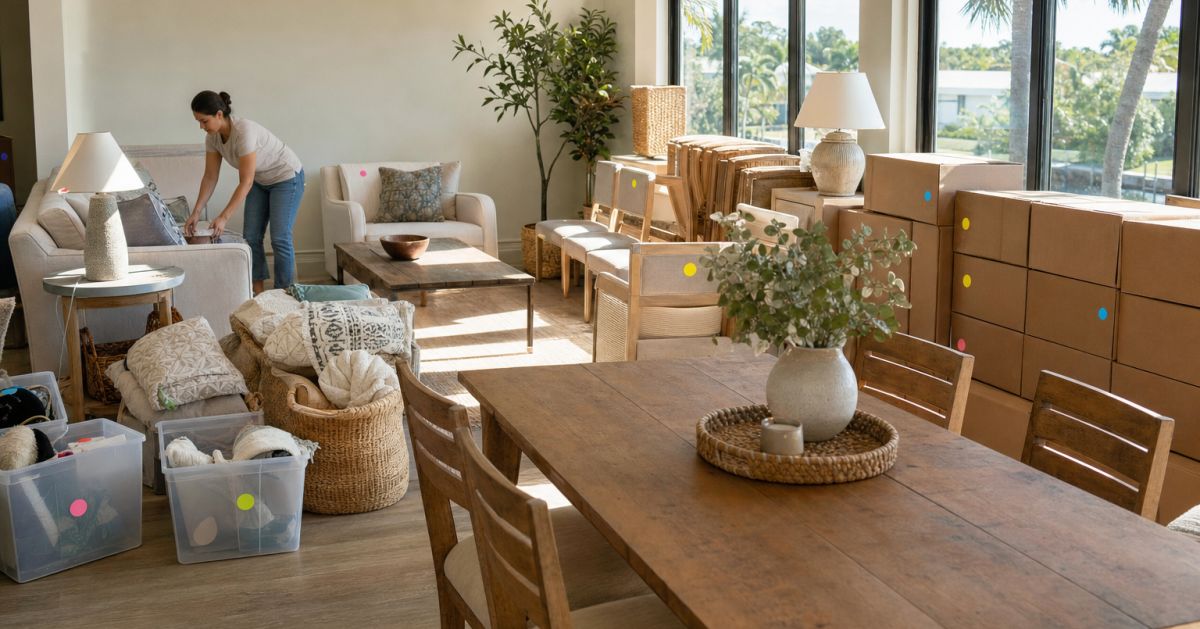
The hardest part of moving into a smaller home is not the packing - it is standing in a living room full of furniture you love and realizing that only half of it will fit through the new front door.
This is one of the most common emotional and logistical sticking points for seniors moving to a smaller home in Sarasota, whether that is a condo on Siesta Key, a villa in Palmer Ranch, an apartment in Lakewood Ranch, or a room in an assisted living community near Bee Ridge Road. The new space is often a third or even a quarter of the square footage you have lived in for decades. The furniture that filled a 2,400-square-foot Gulf Gate home simply cannot follow you into an 850-square-foot apartment.
The good news is that there are far more options for the things that do not make the move than most people realize. The bad news is that each option takes planning, and some of them have windows of opportunity that close fast. This guide walks through every realistic path, explains the trade-offs honestly, and helps you think through which combination makes sense for your situation.
Start with a floor plan, not feelings
Before you decide what stays and what goes, get the floor plan of your new home with real dimensions. Many senior communities and apartment complexes in areas like The Meadows or Longboat Key will provide one, and you can often request it from the leasing office or your real estate agent.
Tape out the room dimensions on your current floor if you need to visualize it. Then measure every major piece of furniture you are considering bringing. This is not optional - it is the foundation of every decision that follows. A sofa that is 96 inches wide will not fit in a living room that is only 11 feet across once you account for traffic flow and other furniture.
A senior move manager can help you do exactly this kind of space planning before you pack a single box, which prevents the painful scenario of moving beloved furniture into a new home only to discover it has to go right back out.
Option 1: Pass items to family members
For many families, this is the first and most emotionally satisfying path. Children, grandchildren, nieces, and nephews may genuinely want the dining room table, the bedroom suite, or the secretary desk that has been in the family for generations.
A few practical things to keep in mind:
- Have the conversation early. Family members need time to arrange pickup and, if they live out of state, to coordinate shipping or a moving truck. Do not assume someone will want something - ask directly, and give them a real deadline.
- Be specific about what you are offering. "Some of the furniture" creates confusion. Walk through each room and make a clear list of what is available.
- Do not warehouse items on their behalf indefinitely. If a grandchild wants the hutch but cannot take it for six months, that is a storage problem for them to solve, not for you to absorb into the moving budget.
- Gift it formally if the item has significant value. For antiques or items worth more than a few hundred dollars, a simple written note documenting the gift protects everyone and keeps things clear for estate purposes.
Option 2: Estate sales
An estate sale is one of the most efficient ways to convert a large volume of household contents into cash in a short period of time. A professional estate sale company comes in, researches and prices items, stages the sale, runs it over one or two weekends, and handles the transactions. You typically receive a percentage of the proceeds after the company's commission, which commonly runs between 25 and 40 percent depending on the company and the volume of goods.
Estate sales work best when there is a substantial quantity of items, when at least some pieces have collectible or antique value, and when you have enough lead time - most reputable estate sale companies in the Sarasota area book several weeks out.
What estate sales are not ideal for: inexpensive, mass-produced furniture from the 1990s and 2000s. That category of item rarely sells well at estate sales because the secondary market for it is soft. Be honest with yourself and with the estate sale company about what you have.
If you are curious about how this fits into the broader move process, the frequently asked questions page covers how a senior move manager coordinates with estate sale companies so the two processes do not conflict.
Option 3: Consignment shops
Consignment is different from an estate sale. You bring (or arrange delivery of) specific pieces to a consignment shop, they display the items in their showroom, and when the item sells, you receive a percentage - typically 40 to 60 percent of the sale price. The item may sit for 30, 60, or 90 days before it sells, and many shops have agreements that allow them to discount the item over time if it has not moved.
Consignment works well for:
- Quality furniture in good condition (solid wood, name brands, well-maintained upholstery)
- Artwork, mirrors, and decorative items with visual appeal
- Smaller collectibles and quality home accessories
It is a slower process than an estate sale, so plan accordingly. If you are on a firm moving timeline, check the shop's consignment agreement carefully - you may not be able to retrieve an item quickly if it has not sold and you need to move on.
Option 4: Charitable donation
Donating furniture and household goods to a charitable organization benefits the community, may provide a tax deduction (consult your tax advisor for specifics under current IRS guidelines), and gets items out of the home efficiently. Several national and local organizations accept furniture donations and will arrange pickup.
Habitat for Humanity's ReStore program accepts gently used furniture, appliances, and building materials. The Salvation Army and Goodwill also accept furniture, though their pickup scheduling can vary by location and availability in the Sarasota area.
Important caveats:
- Most charities will not accept items that are stained, torn, broken, or missing hardware. Inspect pieces honestly before scheduling a pickup.
- Call ahead and confirm what they are currently accepting. Inventory needs change, and organizations sometimes pause pickups for specific categories.
- Schedule pickup early. During peak moving seasons in Sarasota - which tend to cluster around the spring snowbird departure and fall arrivals - pickup slots fill up fast.
The IRS requires a written acknowledgment from the organization for any donation valued at $250 or more, and a completed Form 8283 for non-cash donations over $500. The organization itself does not assign a value - that is your responsibility. The IRS publication on charitable contributions (IRS Publication 526) covers the rules clearly.
Option 5: Online resale marketplaces
Platforms like Facebook Marketplace and Craigslist allow you to sell items directly to local buyers, often within days. This can work well for furniture that has real value but does not fit the consignment shop's aesthetic, or for practical items like lawn equipment, tools, and appliances.
The trade-offs are real, though. You will need to photograph items, respond to inquiries, negotiate with buyers, and coordinate pickups. For someone in the middle of a move, this can be exhausting. It also involves letting strangers into your home, which requires some caution.
A practical middle path: have a family member or trusted friend manage the listings on your behalf. They handle the communication and scheduling, and you handle the handoff when buyers arrive.
Option 6: Auction houses
For high-value individual pieces, an auction house can be the right answer. Items like fine art, antique furniture, sterling silver, estate jewelry, and high-end collectibles may achieve prices at auction that far exceed what an estate sale or consignment shop would net.
The process takes longer - most auction houses require items weeks in advance of a scheduled auction date - and results are variable. But for the right items, it is worth exploring. Look for auction houses that specialize in the category of item you have.
Option 7: Junk removal and disposal
This is the option nobody wants to talk about, but it is a real part of almost every senior move. Some items simply have no resale or donation value, and they still need to leave the house. Broken furniture, outdated electronics, worn-out mattresses, and similar items require disposal.
Professional junk removal services will come to your home, load items into their truck, and haul them away. They typically separate items for donation, recycling, and disposal - which is both more environmentally responsible and, in some municipalities, required. The EPA's guidance on sustainable materials management provides context on responsible disposal practices.
Budget for this. It is not a free option, but it is a fast and effective one.
The sequence matters as much as the options
Here is where many families run into trouble: they try to run all of these options simultaneously without a clear plan, and things collide. The estate sale company arrives to price items while the donation pickup truck is backing into the driveway. Family members show up for their claimed pieces the same day buyers from Facebook Marketplace are scheduled. The junk removal crew hauls off something that had been earmarked for a grandchild.
A logical sequence to consider:
- Family claims items first, with a firm pickup deadline
- Estate sale company evaluates what remains and sets a sale date
- After the estate sale, consign or list online any quality items that did not sell
- Schedule charitable donation pickup for what remains
- Junk removal handles what is left
This sequence is not rigid - every situation is different - but it gives you a framework. Our team at Sarasota Senior Moves helps coordinate exactly this kind of multi-channel process so that nothing falls through the cracks and nothing gets disposed of accidentally.
Special categories that need extra attention
Artwork and antiques. Do not guess at value. Have a certified appraiser evaluate pieces before you sell or donate them. An item that looks like a garage sale painting may have real value, and the reverse is equally true.
Electronics. Televisions, computers, and similar electronics cannot go into regular trash or most donation streams due to hazardous materials. Many retailers and municipalities offer electronics recycling. The EPA maintains guidance on responsible electronics disposal.
Firearms. These require specific legal handling. Do not sell, transfer, or dispose of firearms without understanding Florida law and federal regulations. Consult a licensed firearms dealer.
Medications. Leftover medications are not furniture, but they come up in every cleanout. The DEA's drug take-back program and many Sarasota-area pharmacies offer safe disposal - do not flush medications or put them in the trash.
Planning ahead makes all the difference
The families who handle this process with the least stress are the ones who start planning three to six months before the move date. That window gives time for family conversations, estate sale scheduling, consignment shop agreements, and donation pickups without everything happening in a frantic final week.
If you are helping a parent or loved one navigate this in Sarasota, Osprey, Fruitville, or anywhere in Sarasota County, you do not have to figure it all out alone. Our senior move management services cover everything from space planning and coordination with estate sale companies to overseeing donation pickups and junk removal - so the people you care about can focus on the exciting part of the move, not the overwhelming part.
You can also read more about the full scope of what professional help looks like in our post on what a senior move manager actually does on moving day, and get oriented on the broader downsizing process in our guide to downsizing a lifetime of belongings for a Sarasota move.
When you are ready to talk through your specific situation, reach out to us directly. There is no obligation, and even a short conversation usually brings a lot of clarity.